
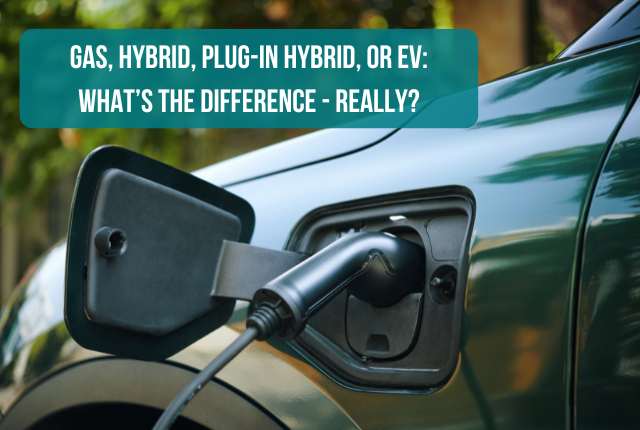
Whether you’re shopping for a new vehicle or just maintaining the one you already own, it can feel confusing because of the different types of engines available these days. At Houska Automotive we believe informed drivers make confident decisions. So, here’s a breakdown of the most common engine types and what they mean for your vehicle’s care.
Gas-Powered Vehicles: The Familiar Standard
Traditional gas vehicles run entirely on an internal combustion engine. Fuel is ignited inside the engine, creating power that turns the wheels. People choose gas vehicles because they have a lower upfront cost, and gas stations are commonly available.
Gas vehicles require routine maintenance like oil changes, exhaust system checks, transmission service and replacement of belts and spark plugs. Because gas-powered vehicles have been around for so long, techs and owners have become experts at maintaining them.
Hybrid Vehicles: Gas + Electric Working Together
Hybrids combine a gas engine with an electric motor. The vehicle automatically switches between the two—or uses both—depending on driving conditions. The battery recharges itself through braking and driving, so you never plug it in. Owners like hybrid vehicles for their eco-benefits. They are more fuel-efficient and release less emissions.
Since hybrid vehicles use both gas and electric, the maintenance is a combination. They need traditional maintenance like oil changes and brakes, but they also need their high-voltage batteries and electric components taken care of. Proper service requires technicians who are trained in both mechanical and electrical systems.
Plug-In Hybrids: A Flexible Middle Ground
Plug-in hybrids work very much like regular hybrids, except they use a larger battery that can be charged from an outlet. Many plug-in hybrids can go 20-50 miles on electricity alone before switching to gas. So, for that reason, plug-in hybrid owners love that they can go on short daily drives without using gas, resulting in lower fuel costs.
Like regular hybrid vehicles, maintenance is required for both the gas and electric systems. That would include everything from oil changes to battery diagnostics.
Electric Vehicles (EVs): Full Electric Driving
Just as the name implies, EVs run entirely on electricity stored in a high-capacity battery. There is no gas engine. A full electric vehicle provides drivers with a quiet, smooth ride and no reason to stop for fuel!
While EVs don’t need oil changes, they still need their brakes, tires and cooling system checked. They also need software updates and battery life checks.
At Houska Automotive, our technicians are consistently trained on the evolving vehicle technologies. We’re able to properly and accurately diagnose different engine types. We can recommend maintenance based on the vehicle engine type and help you protect your vehicle for the long run. So, no matter which type of engine you have, give us a call to come up with an effective maintenance plan for you.